Key takeaways
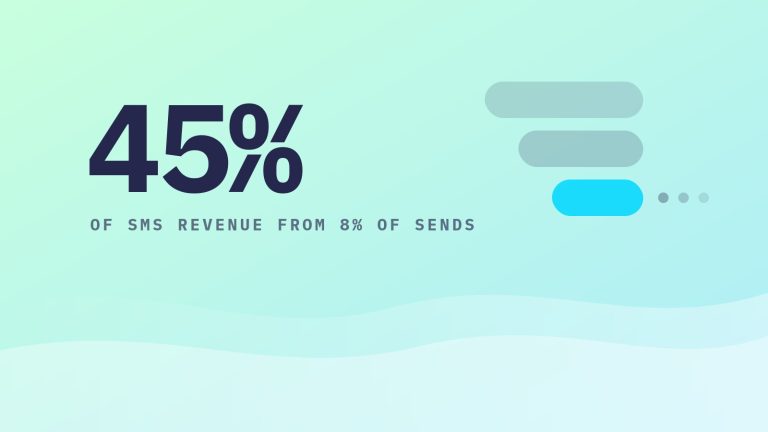
- Email flows generate roughly 41% of total email revenue from just 5.3% of sends.
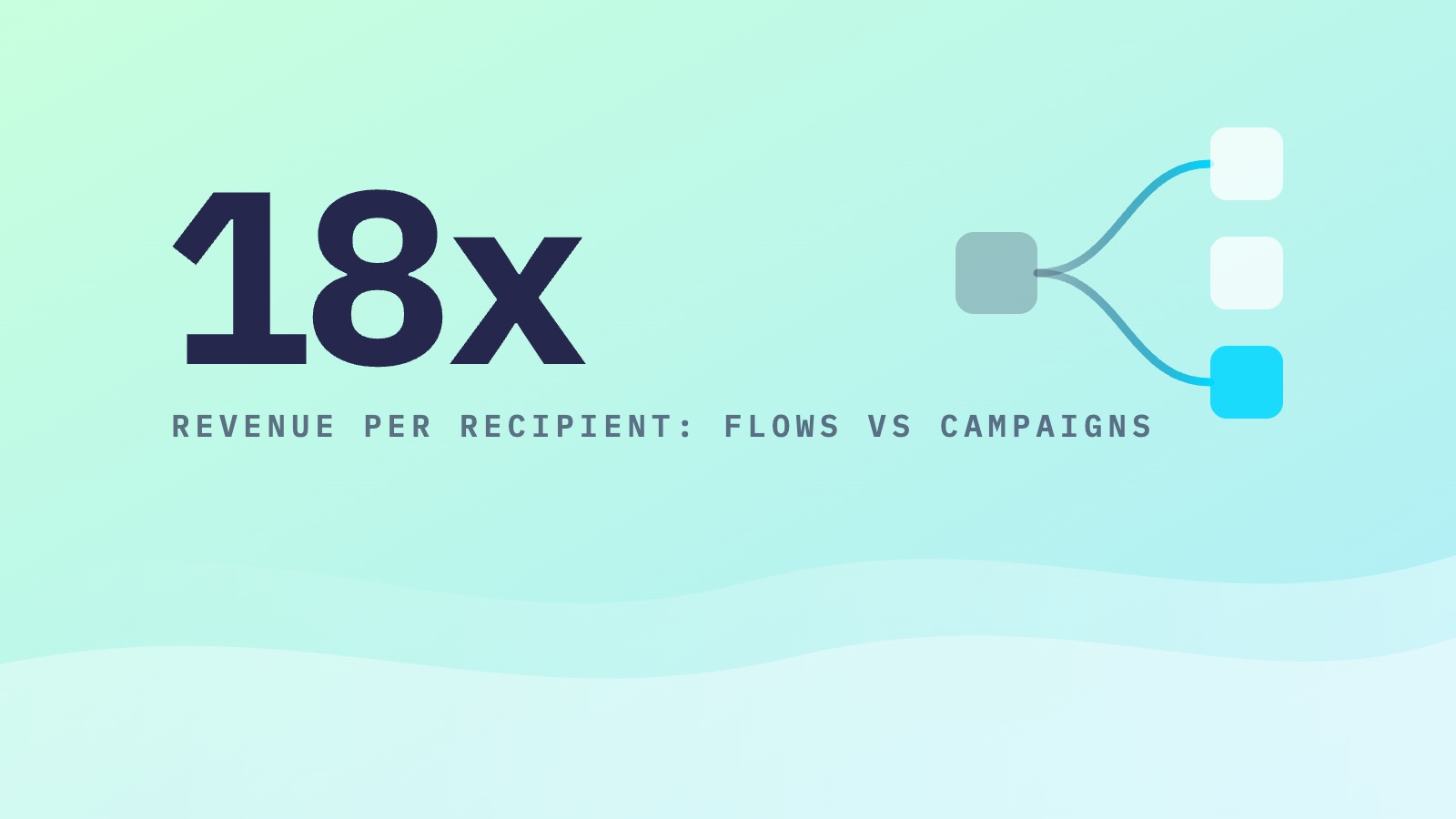
- Revenue per recipient from flows runs about 18x higher than one-off campaigns.
- Five core flows do the heavy lifting: welcome, abandonment, post-purchase, win-back, and sunset.
Here is the most lopsided statistic in ecommerce marketing right now: email flows generate roughly 41% of total email revenue from just 5.3% of sends, according to Klaviyo’s 2026 benchmarks. Revenue per recipient from automated flows runs about 18 times higher than one-off campaigns.
Read that again. The emails you spend the least time on, the automated ones that trigger themselves, out-earn your carefully planned campaign calendar by an order of magnitude on a per-send basis. Klaviyo’s own benchmarks show flow emails delivering around 3x the click rate of campaigns and roughly 13x the placed-order rate.
If your email program is mostly campaigns, weekly blasts planned in a content calendar, you are working harder for less money. This post covers why flows dominate, which flows matter most, and where most brands get them wrong.
Why Flows Outperform So Dramatically
Campaigns interrupt. Flows respond.
A campaign lands whenever you decided to send it, regardless of where any individual recipient is in their buying journey. A flow triggers at the exact moment a specific person does something meaningful: joins your list, browses a product, abandons a cart, makes a first purchase, or goes quiet for ninety days.
That timing difference is the entire story. The message arrives while the intent is live. Nearly 48% of flow-driven revenue comes from new buyers, versus 16% for campaigns, which means flows are not just milking your existing base. They are converting people who were on the fence.
48%Nearly half of flow-driven email revenue comes from new buyers, versus 16% for campaigns. Flows are converting the people who were on the fence.
| Flows | Campaigns | |
|---|---|---|
| What triggers the send | A customer action: signup, browse, cart, purchase, going quiet | A date on your content calendar |
| When it lands | While the intent is live | Whenever you decided to send it |
| Share of email sends | About 5% | About 95% |
| Share of email revenue | About 41% | About 59% |
| Revenue per recipient | Nearly 18x campaigns | Baseline |
| Click rate | 5.58% | 1.69% |
| Revenue from new buyers | Nearly 48% | About 16% |
| Best used for | Converting intent automatically | Launches, list engagement, feeding the flows |
Source: Klaviyo 2026 email benchmarks, 183,000+ brands.
The Core Flows Every Ecommerce Brand Needs
1. Welcome Flow, Split Two Ways
The welcome flow is your highest-revenue-per-recipient automation, and it is also where we see the most common mistake in audits: sending the same welcome experience to everyone.
A new subscriber who has never bought needs trust-building, social proof, and often an incentive. A new customer who just bought needs onboarding, expectation-setting, and zero discounts, because discounting someone who already purchased at full price is pure margin donation. Build two paths from day one.
2. Abandonment Flows, Layered
Cart abandonment is the classic, but it is one of three layers: browse abandonment for viewers who never carted, cart abandonment for carters who never checked out, and checkout abandonment for the highest-intent group of all. Each layer deserves its own messaging, escalating from gentle reminder to urgency to, only if needed, incentive. Leading with a discount trains your audience to abandon on purpose.
3. Post-Purchase Flow
The moment after a first purchase is your best window to create a repeat customer. Order confirmation content, education on getting the most from the product, a review request timed to arrive after delivery, and a cross-sell matched to what they bought. For consumable products, a replenishment reminder timed to your average usage cycle is some of the easiest revenue in ecommerce.
4. Win-Back Flow
Customers who have gone quiet past your typical repurchase window get a re-engagement sequence before they decay into a dead segment. Test incentive-led against novelty-led (new products, new use cases) messaging; the right answer varies by brand.
5. Sunset Flow
The unglamorous one that protects everything else. Chronically unengaged subscribers hurt your deliverability, and deliverability is the tax rate every other email pays. A sunset flow gives them a last chance, then suppresses them so your engaged sends keep landing in the inbox.
What Separates Great Flows From Default Ones
Most platforms ship template flows, and most brands never evolve past them. The gap between default and great comes down to three things.
- Segmentation that respects intent. A first-time visitor abandoning a $30 item and a repeat customer abandoning a $300 cart should not get the same email. Branch your flows on purchase history, cart value, and engagement level.
- Timing tested, not guessed. The default delays in your platform are averages across every industry. Your customers have their own rhythm. Test send delays the way you test creative.
- Campaigns still matter, but differently. This is not an argument to stop sending campaigns. Campaigns drive list engagement, launch products, and feed the flows. The point is allocation: most brands over-invest effort in campaigns and under-invest in the automations that quietly produce 40% of the revenue.
The Paid Media Connection
Flows also change your paid media math. Every subscriber your ads capture enters a system that converts them at 18x campaign efficiency, which means list growth is one of the highest-ROI objectives your paid campaigns can have. And every flow-driven purchase generates the first-party purchase data that makes your ad platforms smarter. The retention engine and the acquisition engine are the same machine viewed from two sides.
Audit Before You Build
Before adding anything new, benchmark what you have: revenue share from flows versus campaigns, revenue per recipient by flow, and where each flow’s engagement drops off. In our experience, most brands find at least one core flow missing entirely and two more running on defaults that have never been tested.
Frequently Asked Questions
What percentage of email revenue should come from flows?
High-performing ecommerce brands generate roughly 40% of email revenue from flows, despite flows making up only around 5% of total sends. If your flow share is well below that, the gap usually points to missing automations or default setups that have never been optimized.
What email flows should an ecommerce brand have?
The core five: a welcome flow split between subscribers and customers, layered abandonment flows (browse, cart, checkout), a post-purchase flow, a win-back flow, and a sunset flow to protect deliverability. Most brands we audit are missing at least one entirely.
Should welcome emails include a discount?
For new subscribers who have never purchased, an incentive usually earns its keep. For new customers entering a welcome flow after buying at full price, discounting is margin donation. Split the flow so each audience gets what it actually needs.