Key takeaways
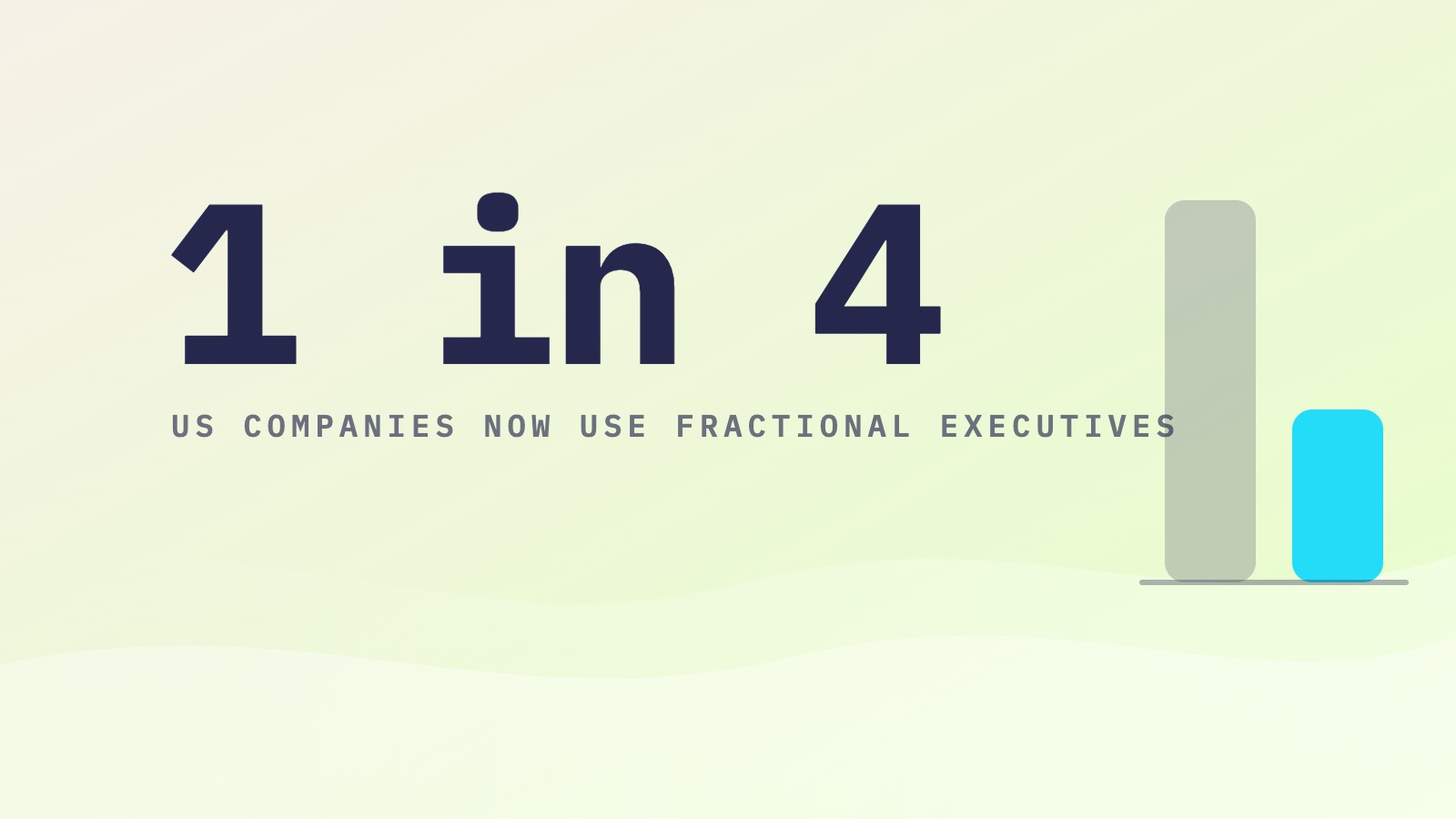
- 1 in 4 US companies now uses fractional executive hiring, projected to reach 35% by year-end.
- A fractional CMO typically runs $5,000-$15,000 per month, 50-75% less than a full-time hire all-in.
- The model fits best between roughly $500K and $10M in revenue, with a proven product but under-led go-to-market.
Somewhere between your first million in revenue and your first ten, the same problem arrives at every founder’s desk: marketing has outgrown you. The channels multiplied, the agency relationships need managing, the budget decisions carry real consequences, and founder-led marketing, which got you here, has become the bottleneck.
The reflexive answer used to be “hire a CMO.” In 2026, that reflex deserves scrutiny. One in four US companies now uses fractional executive hiring, with projections reaching 35% by year-end, and Gartner forecasts that over 30% of midsize enterprises will keep at least one fractional executive on retainer by 2027. Fractional marketing leadership has gone from a workaround to a mainstream strategic choice.
This post lays out the honest decision framework we walk founders through, including when the full-time hire really is the right call.
What a Fractional CMO Actually Is (and Is Not)
A fractional CMO is a senior marketing executive who leads your marketing function part-time, typically one to three days per week on an ongoing retainer. They own strategy, budget allocation, agency and team management, and accountability for results. The “fraction” is their time, not their seniority.
What a fractional CMO is not: a consultant who leaves a slide deck and disappears, a freelance marketer executing channel work, or an agency account manager with a fancier title. The defining trait is ownership. If they do not own the outcome, they are not a fractional CMO, whatever the invoice says.
The Math That Drives the Decision
A credible full-time CMO for a growth-stage brand costs $250,000-$400,000+ once salary, bonus, benefits, and equity are counted, and the hiring process routinely takes six months or more. Get the hire wrong, and the true cost, severance plus the strategic drift plus another search, can consume a year.
50-75% lessA fractional CMO typically runs $5,000-$15,000 per month, with engagement starting in weeks rather than quarters.
Companies using the fractional model report meaningfully faster time to market, because the executive arrives with a playbook already built from other companies at your exact stage.
The money matters, but the risk profile matters more. At $1M-$10M in revenue, a mis-hired CMO is one of the most expensive mistakes available to you. The fractional model converts that bet-the-year decision into a monthly decision.
When Fractional Is the Right Answer
The pattern we see most often: the fractional model fits companies between roughly $500K and $10M in revenue with a proven product but an unclear or under-led go-to-market. Specific triggers:
- Founder-led marketing has hit its ceiling. You have traction, but growth depends on your personal bandwidth and instincts, and both are maxed.
- You have executors but no strategy. An agency here, a freelancer there, maybe a junior in-house marketer, and nobody senior deciding what it all adds up to.
- Budget decisions have gotten expensive. You are spending real money across paid media, retention, and content with no one accountable for the portfolio-level return.
- A high-stakes window is approaching. A fundraise, a product launch, a make-or-break Q4. Senior leadership now matters more than senior leadership eventually.
- You need the strategy before you can justify the team. A fractional CMO can design the function, prove the model, and then help you hire the full-time team into it.
When to Hire Full-Time Instead
The honest other side of the framework. A full-time CMO is the right call when marketing is the company’s core competitive weapon rather than a supporting function, when the team has grown past roughly eight to ten marketers and needs daily leadership and development, when internal politics and cross-functional presence genuinely require a full-time seat at the table, or when you are past $15-20M and the strategic surface area fills a week every week.
A good fractional CMO will tell you when you have reached that point. It is usually visible a year in advance, and the best fractional engagements end with the executive helping recruit their own full-time replacement.
What a Good Engagement Looks Like
The first 90 days of a strong fractional CMO engagement follow a recognizable arc: a diagnostic across your channels, data, and team; a prioritized strategy with clear success metrics; and then operating rhythm, weekly leadership of the people and partners executing the work.
Ask any candidate three questions. What companies at our exact stage have you led, and what happened? How will we measure your impact in the first two quarters? And who does the work your strategy requires, and how will you manage them? Vague answers to the third question are the most common failure mode in fractional arrangements: strategy with no hands.
The Stage-Appropriate Leadership Principle
The fractional trend is not really about cost savings. It is about matching the leadership to the stage. A $3M brand does not need 40 hours a week of CMO-level strategy; it needs 10 great ones, consistently, from someone who has seen the road ahead. Paying full-time prices for part-time need, or getting no senior leadership at all because full-time prices are out of reach, are both stage mismatches. The fractional model exists to fix exactly that.
Frequently Asked Questions
How much does a fractional CMO cost?
Typically $5,000-$15,000 per month depending on scope and days per week, compared with $250,000-$400,000+ all-in for a full-time CMO. That works out to 50-75% savings, with engagements starting in weeks rather than the six-plus months a full-time search usually takes.
What size company should hire a fractional CMO?
The model fits best between roughly $500K and $10M in revenue: companies with a proven product but an under-led go-to-market, where founder-led marketing has hit its ceiling but a full-time executive is not yet justified.
What is the difference between a fractional CMO and a marketing consultant?
Ownership. A consultant delivers recommendations and leaves. A fractional CMO owns the marketing function on an ongoing basis: strategy, budget, team and agency management, and accountability for results, just on a part-time schedule.