SMS is the channel ecommerce brands consistently get wrong in one of two directions. Half treat it like email’s little sibling and blast their list until unsubscribes spike. The other half are so afraid of annoying people that they barely use it at all.
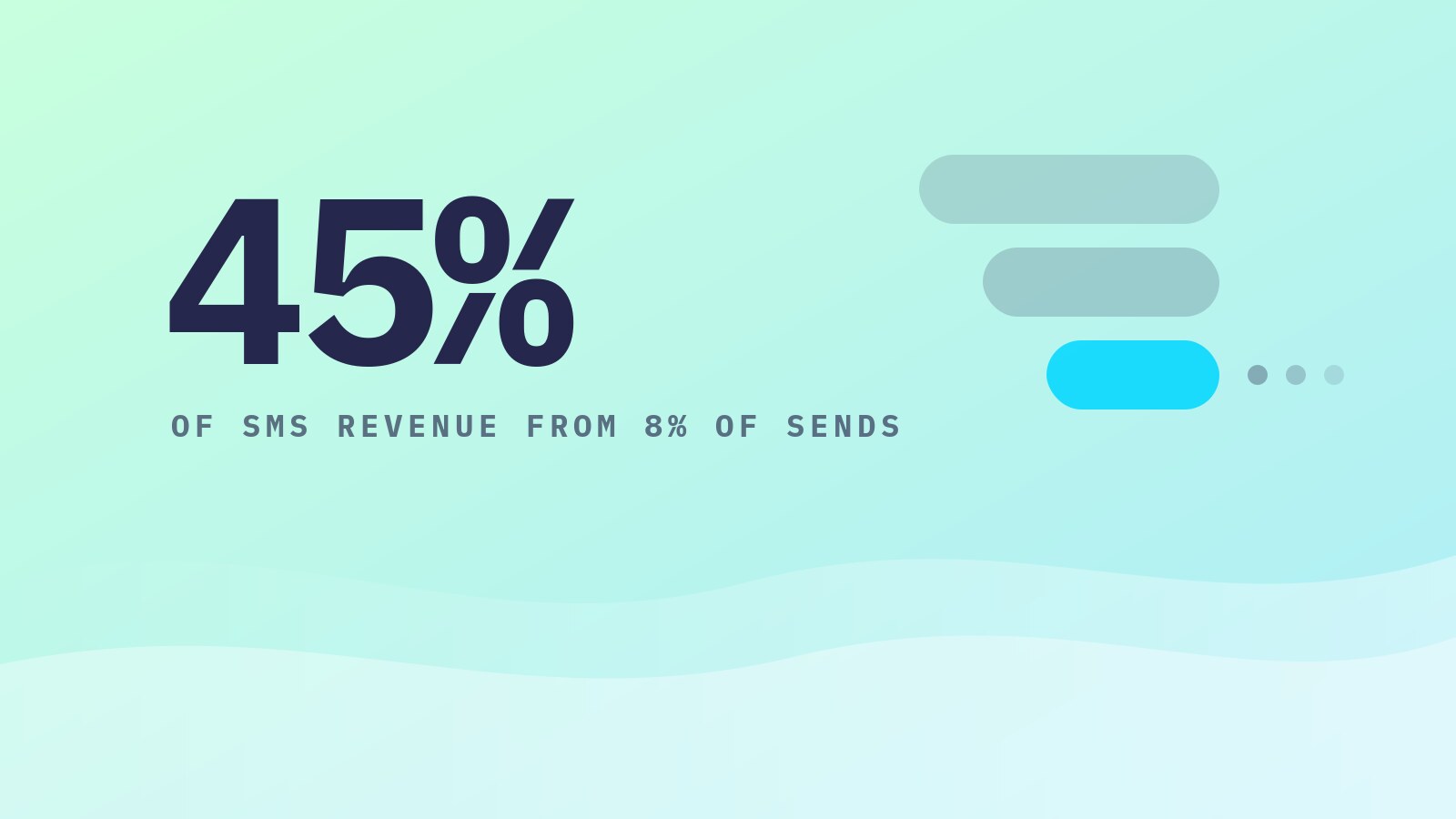
The data points to a third path. SMS flows, the automated, behavior-triggered messages, account for just 7.6% of SMS sends yet drive 45.2% of total SMS revenue. That is an even more extreme skew than email, where flows produce about 41% of revenue from 5.3% of sends. The lesson is the same in both channels, amplified in this one: automation earns, blasting burns.
For top-performing brands, email and SMS together now generate 38-45% of total revenue. Here is how to build the SMS side of that machine.
Why SMS Behaves Differently Than Email
A text message is read within minutes or not at all. There is no inbox to return to, no promotions tab, no “mark unread.” That immediacy is the channel’s superpower and its constraint.
It means SMS is the wrong channel for anything that can wait and the perfect channel for anything that cannot: a cart that is about to be abandoned for good, a flash sale ending tonight, a back-in-stock alert for a product that sells out. Intent-based, real-time messaging is precisely why flows so dominate SMS revenue.
It also means the cost of a bad send is higher. An irrelevant email gets ignored. An irrelevant text gets an unsubscribe, and unlike email, every SMS costs real money to send. The economics themselves push you toward fewer, smarter messages.
The SMS Flows That Earn Their Keep
1. Welcome Series
Trigger immediately on opt-in, when interest is hottest. Deliver the signup offer, set expectations for what kind of texts you send, and drive the first purchase. Like email welcomes, split new subscribers from existing customers so you are not discounting people who already buy at full price.
2. Abandonment Layer
Cart and checkout abandonment texts are the highest-ROI messages in the channel. A single well-timed text, arriving 30-60 minutes after abandonment while the session is still fresh in memory, routinely outperforms an entire email sequence on conversion rate. Coordinate the two channels: text first for speed, email afterward for detail.
3. Transactional-Plus
Shipping and delivery notifications get near-universal open rates. They are also brand touchpoints: a delivery confirmation that includes a getting-started tip or a review request does quiet revenue work that pure logistics messages waste.
4. Replenishment and Back-in-Stock
For consumables, a text timed to the usage cycle (“running low?”) converts at rates campaigns can only dream about. Back-in-stock alerts are similar: high intent, natural urgency, and the customer explicitly asked to be told.
5. VIP and Early Access
Your SMS list should get things first. Early access to launches and sales gives subscribers a concrete reason to stay on the list, and it warms your best customers before big moments like BFCM, when reaching them by paid media costs 2-3x normal prices.
SMS Campaigns: The 20% That Still Matters
Automations carry the revenue, but a disciplined campaign cadence still has a job: launches, genuine sales, and time-sensitive announcements. The keyword is genuine. Every campaign text should pass a simple test: would a reasonable customer be glad their phone buzzed for this? If not, it is an email, not a text.
Most brands land at two to six campaign texts per month. Past that, list churn typically outpaces the revenue gained.
SMS Compliance Is Not Optional
SMS is a regulated channel, and the rules have teeth. The essentials: explicit opt-in consent collected before the first message (TCPA requirement in the US), clear identification of your brand in messages, HELP and STOP keywords honored instantly, and quiet hours respected, no texts outside roughly 8am-9pm in the recipient’s local time zone.
None of this is burdensome once built into your setup, and your ESP or SMS platform handles most of it. But it has to be configured deliberately, especially quiet hours for brands with national audiences spanning time zones.
Growing Your SMS List Without Buying Junk
The quality of your SMS program is decided at the opt-in. Tactics that work: two-step forms that capture email first and SMS second, offering a stronger incentive for SMS than email (the channel is worth it), checkout opt-ins for transactional-plus messaging, and back-in-stock alert signups on sold-out product pages, which capture the highest-intent subscribers of all.
Every subscriber captured is also a paid media asset: a person you can reach for pennies instead of auction CPMs, and a first-party data point that sharpens your ad targeting. List growth belongs in your paid campaign objectives, not just your retention plan.
Email and SMS: One System, Two Speeds
The brands doing this best do not run email and SMS as parallel programs. They run one lifecycle system where SMS handles the urgent and email handles the rich: text for the abandoned checkout, email for the product education; text for the sale ending tonight, email for the lookbook. Suppression logic keeps the channels from stepping on each other.
If your flows in either channel are still running on platform defaults, that is the highest-leverage fix available in your retention stack right now.
Frequently Asked Questions
How many marketing texts should a brand send per month?
Most ecommerce brands land at two to six campaign texts per month, with automated flows handling the rest. Past that range, list churn typically outpaces the revenue gained. Every campaign text should pass one test: would a reasonable customer be glad their phone buzzed for this?
What is the best time to send an abandoned cart text?
Thirty to sixty minutes after abandonment, while the session is still fresh in the customer’s memory. Send the text first for speed, then follow with email for detail, and use suppression logic so the channels do not double-message the same person.
Is SMS marketing worth it for small ecommerce brands?
Yes, and arguably more so, because flows do the heavy lifting without ongoing campaign effort. A welcome series and an abandonment text alone typically pay for the channel. Combined email and SMS drive 38-45% of revenue for top-performing brands of every size.
Want a lifecycle audit across both channels? Book a strategy call with the Strat88 team and we will map your email and SMS automation against what top-performing brands run.