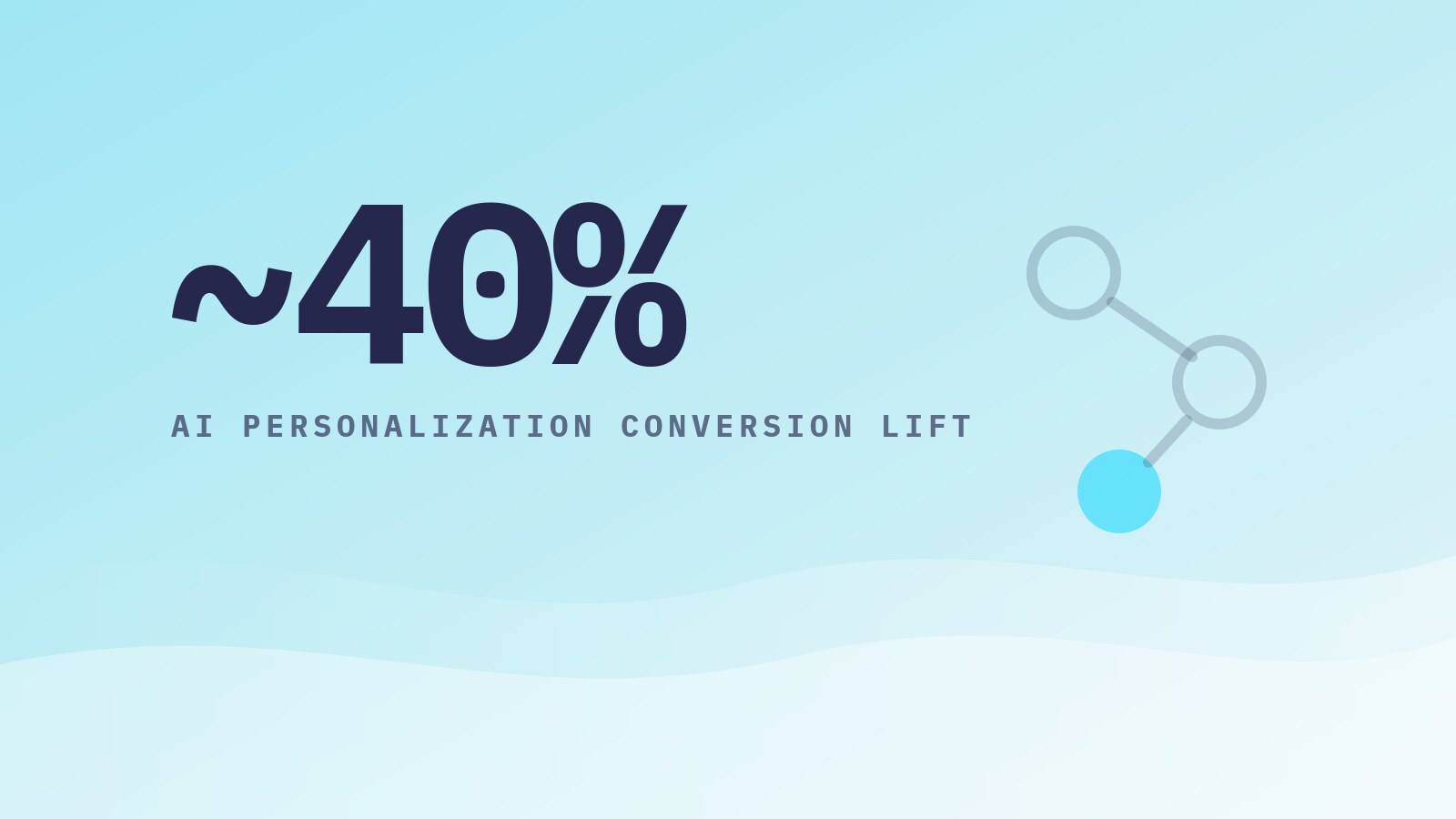
Most landing pages lose half their visitors within seconds, and the median landing page converts at 6.6% while top performers clear 10%. That gap, between median and top, is the entire business case for CRO (conversion rate optimization). And in 2026, the fastest-moving lever for closing it is AI-driven personalization, which is lifting conversions by around 40% for the brands doing it well.
But here is the thing we tell every client before a CRO engagement: the tooling is not the strategy. 2026 is the year CRO finally matured past button-color A/B tests, and the brands winning are the ones treating conversion as a system, data, personalization, page experience, and trust working together, rather than a series of isolated experiments.
This post covers what is actually working right now, roughly in order of impact.
Personalization: From Segments to Individuals
Rules-based personalization, showing returning visitors one banner and new visitors another, has been around for a decade. What changed is that AI moved personalization from static segments to real-time adaptation: pages that reorder products, adjust messaging, and select offers based on the live behavior of the individual visitor.
The numbers behind the shift are hard to ignore. Beyond the ~40% overall lift from AI personalization, personalized CTAs (calls to action) convert 202% better than generic ones, and dynamic pages convert roughly 25% more mobile users than static pages.
Where to apply it first, in order of typical return:
- Traffic-source matching. The highest-leverage personalization is also the simplest: make the landing page continue the conversation the ad started. Visitors from a UGC video about a specific use case should land on that use case, not your generic homepage.
- Returning visitor states. Show past browsers what they browsed. Show past buyers replenishment or cross-sell, not the first-timer discount.
- Personalized CTAs. Match the ask to the visitor’s stage: “Start your first order” versus “Restock your favorites.”
Speed: The Unsexy Multiplier
Every second of load time costs roughly 7% in conversions, and the critical threshold sits around two seconds. No personalization engine recovers what a slow page loses, and this compounds on mobile, where most ecommerce traffic actually lives.
Before any testing roadmap, we baseline Core Web Vitals and fix the obvious offenders: uncompressed images, render-blocking scripts, and app bloat on Shopify stores. It is the least glamorous work in CRO and frequently the best-returning.
Testing: Faster Cycles, Bigger Swings
A/B testing is not dead, but the way it is practiced has changed in two ways.
AI has compressed the cycle. AI-powered testing tools generate page variants, allocate traffic dynamically, and reach conclusions faster, cutting optimization time by as much as 60%. The bottleneck has moved from building tests to deciding what is worth testing.
Small tests are out, hypothesis-driven swings are in. Button colors and headline tweaks rarely move revenue. The tests that do: offer structure, page architecture, social proof presentation, and pricing display. Fewer, bolder tests grounded in actual customer research, session recordings, poll responses, support tickets, beat high volumes of trivial ones.
Trust: The Conversion Layer Nobody Owns
Ask why visitors do not convert and the honest answer is usually not “the button was the wrong color.” It is doubt. Doubt about the product, the shipping, the return policy, or the brand’s existence beyond an Instagram ad.
The fixes are unglamorous and effective: reviews with substance near the point of decision, shipping and return clarity before checkout rather than inside it, real guarantees stated plainly, and UGC that shows the product in actual use. For paid-traffic-heavy brands, this matters double: a visitor from a cold ad has zero accumulated trust, and your page carries the entire burden.
The AI Shopping Shift on the Horizon
One more reason CRO is rising in strategic importance: nine in ten retail executives expect consumers to increasingly use AI assistants over search engines, and half expect today’s multi-step shopping journey to collapse into a single AI-driven interaction within a couple of years.
Nobody knows exactly how that plays out. But structured product data, fast pages, clear value propositions, and strong review profiles, the same assets that convert humans, are also what AI shopping agents parse and recommend. Good CRO is quietly becoming AI-readiness.
Sequencing a CRO Program That Compounds
The order of operations we use with clients:
- Instrument first. Analytics you trust, session recordings, and a clean baseline. You cannot optimize what you measure badly.
- Fix speed and mobile experience. The multiplier on everything else.
- Match pages to traffic. Ad-to-page continuity is the cheapest big win in ecommerce.
- Layer in personalization. Start with source and visitor-state rules, then graduate to AI-driven dynamic content.
- Run bold tests continuously. Hypothesis-driven, research-backed, revenue-focused.
Each layer makes your paid media cheaper, because every point of conversion rate is a discount on every ad dollar you spend. A site that converts at 4% instead of 2% just cut its effective CPA in half without touching a campaign.
Frequently Asked Questions
What is a good ecommerce conversion rate in 2026?
The median landing page converts around 6.6%, while top performers clear 10%. Overall ecommerce site conversion rates vary widely by industry and price point, so benchmark against your own trailing data first, then against your category, and treat the median-to-top gap as your opportunity size.
How does AI improve conversion rate optimization?
Three main ways: real-time personalization that adapts pages to individual visitor behavior (lifting conversions roughly 40%), automated variant generation and dynamic traffic allocation that cut testing time by up to 60%, and pattern detection in session data that surfaces friction humans miss.
What should I test first on my landing pages?
Fix speed before testing anything, since every second of load time costs about 7% in conversions. Then test the big levers: ad-to-page message match, offer structure, social proof placement, and page architecture. Button colors and minor copy tweaks rarely move revenue.
Curious where your site sits against the 6.6% median, and what is holding it back? Book a strategy call with the Strat88 team and we will identify your highest-impact conversion opportunities.