Set your 2027 ecommerce marketing budget from contribution margin, not from a percent-of-revenue rule. Work out what each dollar of revenue has left after product, shipping, fees and returns, decide how much of that you want to keep as profit, and the rest is what marketing can spend. That gives you a breakeven MER, a target MER band and a budget that moves with your margin instead of a fixed number picked in November.
The percent-of-revenue benchmarks most people quote don’t describe a $5M or $30M brand. Here’s how we build the number instead, and the rules we write down before January so the budget can change without a fight.
Key takeaways
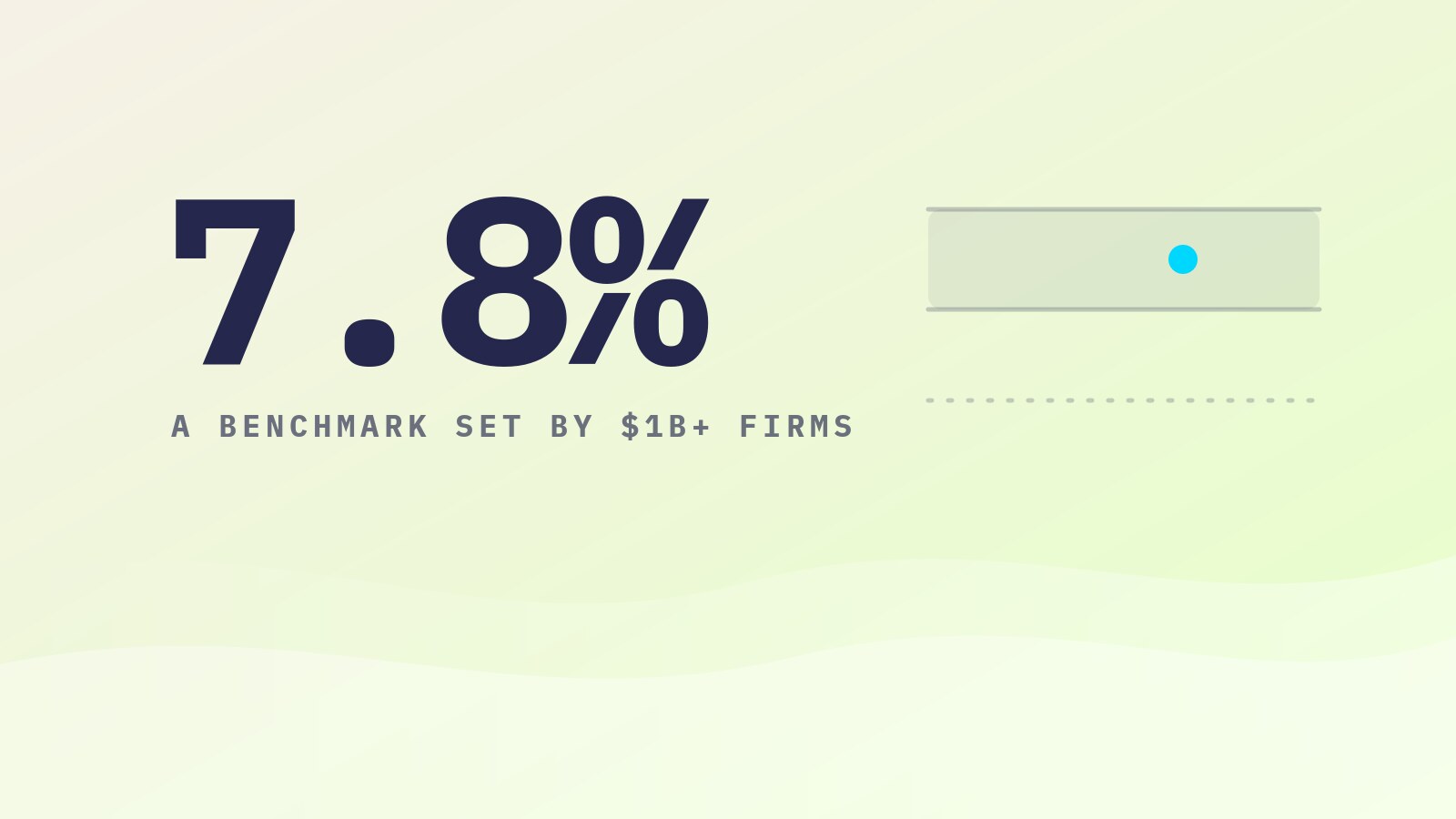
- Gartner’s 2026 CMO Spend Survey puts marketing budgets at 7.8% of company revenue, but most of its 401 respondents work at companies with more than $1 billion in revenue. It is not a DTC benchmark.
- Your ceiling is contribution margin. Breakeven MER is 1 divided by your contribution margin before marketing, and your target MER sits above it by the profit you want to keep.
- Budget new and returning customers separately, phase spend by quarter, and write the reallocation rules down before the year starts.
Why Percent-of-Revenue Rules Fail as an Ecommerce Marketing Budget
The most common way to set a marketing budget is to pick a percent of revenue. The problem is where the percent comes from.
Gartner’s 2026 CMO Spend Survey found marketing budgets average 7.8% of company revenue, up from 7.7% in 2025. That’s a real number from a real survey. It’s also drawn from 401 marketing leaders in North America, the UK and Europe, and Gartner says most of them work at companies with annual revenue above $1 billion. Those companies have brand awareness, retail distribution and repeat demand that a growing DTC brand is still paying to build.
A percent rule also ignores the thing that decides whether marketing is affordable: margin. A brand with 70% gross margin and a brand with 35% gross margin can’t spend the same share of revenue and both make money. And it ignores cost. Meta reported that its average price per ad rose 12% year over year in the second quarter of 2026. If your budget is a fixed percent and media costs rise, you buy less every quarter without ever deciding to.
Use the benchmark as a sanity check, not a plan. The plan starts with your own P&L.
Start Your Ecommerce Marketing Budget From Contribution Margin
Contribution margin before marketing is what’s left from each dollar of net revenue after the costs that come with every order: product cost, shipping and fulfillment, payment processing and returns. It’s the money available to pay for marketing and still leave a profit.
Pull it from last year’s actuals, not from your pricing sheet. Returns are where pricing-sheet math usually goes wrong. The National Retail Federation and Happy Returns estimated that 15.8% of 2025 retail sales would be returned, and 19.3% of online sales. If your return rate is anywhere near that, a margin that leaves returns out is overstated.
A simple build:
- Start with net revenue: gross sales minus discounts and refunds.
- Subtract cost of goods sold.
- Subtract shipping, pick and pack, and packaging.
- Subtract payment processing and per-order app fees.
- Subtract the cost of returns you don’t recover, including return shipping and units you can’t resell.
- Divide what’s left by net revenue. That’s your contribution margin before marketing.
Do this by month if you can. Margin moves with promotions, freight and product mix, and one annual number hides the months where you were paying to grow.
Turn Contribution Margin Into a Breakeven MER and a Target Band
MER, or marketing efficiency ratio, is total revenue divided by total marketing spend. It’s the number we run accounts on because it doesn’t care which platform claims the sale.
Breakeven MER is 1 divided by your contribution margin before marketing. Here is an illustration, not a benchmark: if contribution margin before marketing is 45%, breakeven MER is 1 divided by 0.45, or about 2.2. At 2.2, every marketing dollar is paid for and nothing is left over. If you want to keep 15 points of revenue as contribution profit, marketing can spend 30% of revenue (45 minus 15), which is a target MER of about 3.3.
Then set a band, not a single number. The bottom of the band is where you stop scaling. The top is where you’re probably underspending. In one account we manage, MER was running around 17x against a 10 to 12x band the team had set from margin. The read on the call wasn’t a celebration. It was that the account was underspending and only buying the cheapest demand available.
That read only holds because the band came from real margin. A band picked because it felt right tells you nothing. Write the band into the plan along with one sentence: when we scale, MER will fall toward the bottom of the band, on purpose.
Split the Ecommerce Marketing Budget Between New and Returning Customers
A single MER target blends two jobs: finding new customers and bringing back the ones you have. They cost different amounts, and a blended number lets the cheap one hide the expensive one.
Set a new customer CAC target for acquisition. New customer CAC (customer acquisition cost) is acquisition spend divided by first-time customers. Its ceiling is what a new customer earns you in contribution margin over the payback window your cash can carry: first order margin plus the repeat margin you expect inside that window. For most brands that window is months, not years.
Retention gets its own line. The same Gartner survey found loyalty and retention spending has fallen 29% since 2024, to under 15% of total media spend. That’s large companies again, but the direction is worth noticing. Retention is easy to underfund because nothing breaks right away. For most DTC brands the efficient part of retention is owned channels, and email flows should be built before you push more paid budget at people who already bought.
The practical version: plan acquisition spend against a new customer CAC target, plan retention against a returning customer revenue target, and check that the two together still land inside the MER band.
Phase Your 2027 Ecommerce Marketing Budget by Quarter
An annual budget divided by twelve is wrong in every month. Demand and media costs both move through the year, so the budget should too.
- Q1. A lot of brands pull back in January. If your margin can carry it, that can be a good window to acquire new customers while auction competition is lighter after the holidays. Check your own January CPMs against December before you plan on it.
- Q2 and Q3. Steady state. Run your tests here, including the incrementality tests that tell you which channels deserve more money in Q4.
- Q4. Costs rise and so does demand. Build it from the Q4 planning timeline and whatever your after action report from this Cyber Week tells you.
Phase by contribution margin, not by revenue. A month with heavy discounting has thinner margin, which means less affordable spend at the same revenue.
Set Your Budget Reallocation Rules Before 2027 Starts
Every budget is wrong by March. What makes it useful is agreeing in advance how it changes. Put rules like these in the plan:
- If MER holds above the top of the band for two straight months, raise spend in steps and expect MER to come down.
- If MER falls below the bottom of the band for two straight months, cut the channel with the weakest incremental return first, not the one with the weakest platform ROAS.
- If new customer CAC runs above target for a month, stop scaling acquisition until a creative or offer change brings it back.
- If growth is limited by inventory rather than demand, don’t push spend into stockouts. Hold the budget and protect margin.
Move money in steps, not leaps. The rebalancing framework we use for channel shifts applies to budget changes too.
Someone has to own these calls month to month. For brands without a senior marketing leader, that’s often a job for a fractional CMO rather than a full-time hire. It’s also the core of our growth strategy work: set the plan from margin, then hold it to MER and new customer CAC all year.
Frequently Asked Questions
How much should an ecommerce brand spend on marketing?
There’s no single right percentage. Start from contribution margin before marketing, the share of revenue left after product, shipping, fees and returns. Subtract the profit you want to keep, and the rest is what marketing can spend. Gartner’s 2026 average of 7.8% of revenue comes mostly from companies above $1 billion in revenue, so treat it as a sanity check only.
What is breakeven MER?
Breakeven MER is the marketing efficiency ratio at which marketing spend uses up all of your contribution margin and leaves no profit. Calculate it as 1 divided by your contribution margin before marketing. At a 40% contribution margin, breakeven MER is 2.5. An MER below that means marketing costs more than the orders it brings in are worth.
Should I budget for new and returning customers separately?
Yes. New customers usually cost more to acquire than returning customers cost to bring back, so one blended target lets cheap repeat revenue hide expensive acquisition. Set a new customer CAC target for acquisition spend and a separate revenue target for retention, then check that combined spend still lands inside your MER band.
When should I start planning my 2027 ecommerce marketing budget?
Start in November, once you have most of the year’s actuals, and finish in December after Cyber Week results are in. Use contribution margin by month, your Q4 results and last January’s performance. Then set the MER band, the new customer CAC target and the reallocation rules before January 1.
Want a second set of eyes on your 2027 numbers before the year starts? Reach out to one of our experts and we’ll build the budget from your margin with you.
Sources
- Gartner, "Gartner 2026 CMO Spend Survey Finds CMOs Allocate 15.3% of Marketing Budgets to AI but Only 30% Are Ready to Scale AI Capabilities," 2026
- Gartner via Business Wire, "Gartner Marketing Survey Finds Awareness and Conversion Account for 62.6% of Total Media Spend," 2026
- Meta, "Meta Reports Second Quarter 2026 Results," 2026
- National Retail Federation and Happy Returns, "Consumers Expected to Return Nearly $850 Billion in Merchandise in 2025," 2025
- Strat88 account data, shared as ratios only