Amazon Full-Funnel Campaigns are worth a capped test in Q1 if your sponsored ads already run profitably, but judge them on booked sales and margin, not on Long-Term ROAS. Amazon’s headline result compares them against a blended average of other campaigns, and the metric they optimize toward is partly a 12-month forecast.
The timing adds a problem: three Amazon reporting changes land between December and January. So save your baseline first, then test, then scale on numbers you can check against your own sales.
Key takeaways
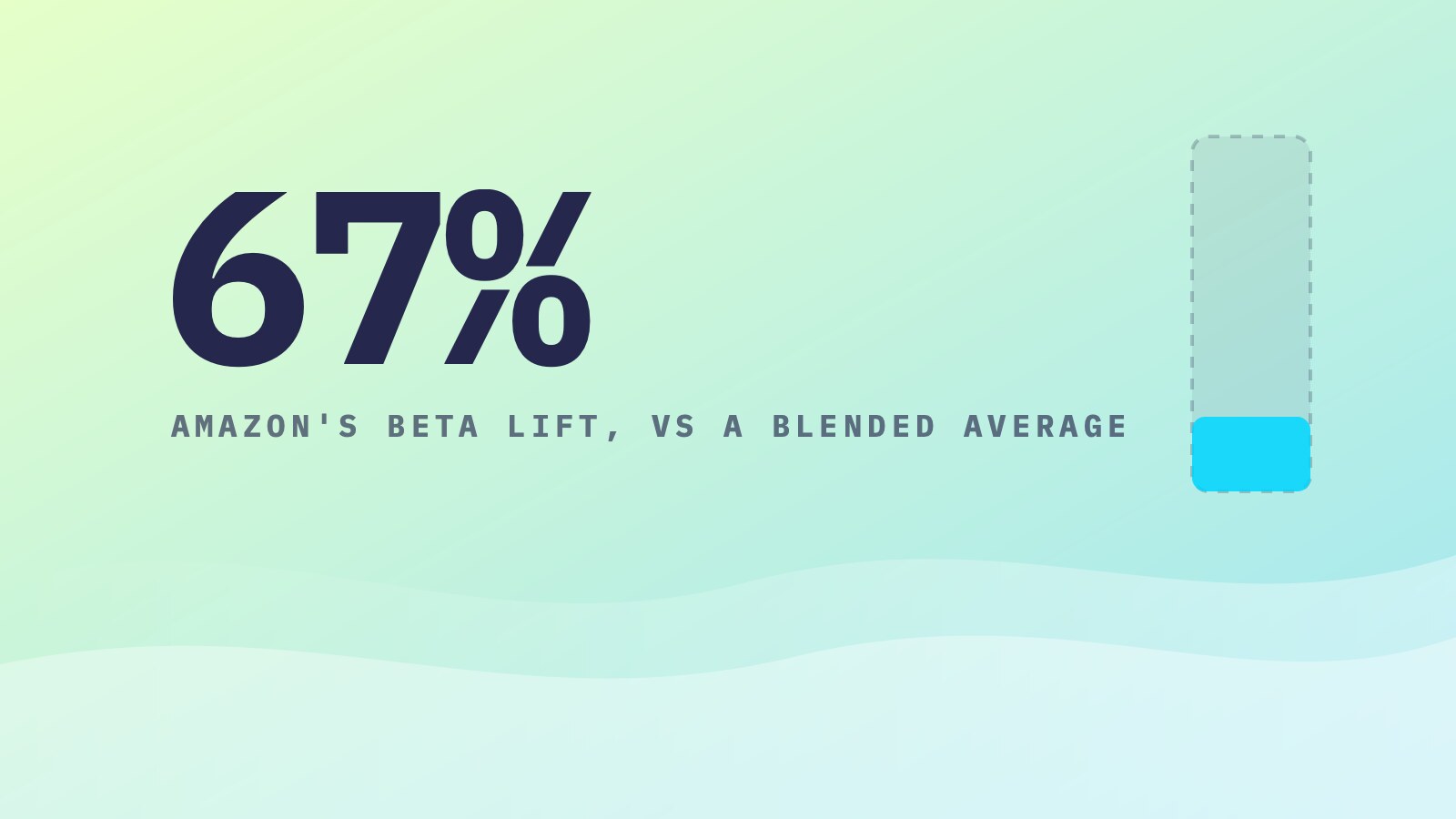
- Amazon says beta advertisers saw 67% higher Long-Term ROAS and 29% lower cost per new-to-brand purchase. Its footnote says that’s against the blended average of other campaigns across beta advertisers, June to August 2026, not a holdout.
- Long-Term Sales is 14-day attributed sales plus Amazon’s estimate of what new-to-brand shoppers will spend over the next 12 months. Split the two before you read the ROAS.
- Export your Amazon reports before December 17, 2026. Legacy report pages go read-only that day, their data is deleted January 31, and display impressions get counted differently from January 1.
What Amazon Full-Funnel Campaigns Are and What You Give Up
Amazon Full-Funnel Campaigns are a single campaign type that runs sponsored ads, display, video and streaming TV from one daily budget, with Amazon’s AI choosing the formats. Amazon launched them on September 29, 2026, as an open beta for US advertisers who sell on Amazon, though its Support Center still says they’re available to some US advertisers.
You set the products (ASINs, Amazon’s product IDs), a daily budget, creative and an optional ROAS threshold. ROAS is return on ad spend, attributed sales divided by spend. Per Amazon’s Support Center, the AI handles bidding, audience targeting, budget allocation and format selection, on Amazon and on third-party sites and apps.
What you give up is control. Advertisers approve creative but can’t select individual channels or specific audiences, and reporting is at the format level, Digiday reported after speaking with Amazon. Amazon’s creative optimization can also change your assets after launch, much like Meta’s Advantage+ creative enhancements.
The floor is $100 a day. Amazon’s setup guide says the budget can’t go below that, recommends running at least 30 days, and asks you to avoid big changes during the first two weeks, which it calls the learning phase. So a real test costs at least $3,000 and a month you won’t touch.
What Amazon’s Full-Funnel Campaigns Numbers Measure
Amazon measured its 67% Long-Term ROAS claim "against the blended average of other campaign performance across beta advertisers," using internal data from June to August 2026. The product page describes the same base as "independently configured campaigns."
That’s a comparison with other campaigns, not a holdout. A holdout keeps matched shoppers, products or regions unexposed so you can see what would have sold anyway. Without one, a campaign that reaches shoppers already headed to your listing looks like growth, the same way Performance Max takes credit for branded search. Analyst firm Futurum flagged the same gap and noted the beta participants were self-selected.
Then there’s the metric. Long-Term Sales (LTS) is 14-day total product sales plus the change in "return on engagement," per Amazon’s Long-term sales page. Return on engagement is what shoppers who took the same action, like a first detail page view, have historically spent with your brand in your category.
So part of every Long-Term ROAS figure is a forecast. Amazon’s own example is a campaign with a 14-day ROAS of 0.50 and a Long-Term ROAS of 2.40. By our arithmetic, about 79% of that reported return hasn’t happened yet.
The comparison base matters too. That page doesn’t list Sponsored Products among the campaigns that get LTS, and Amazon’s new-to-brand page says Sponsored Products doesn’t report new-to-brand data. If the campaigns in the blended average earn little forecast credit, some of the 67% can come from the metric rather than the media. Amazon doesn’t publish the split.
New-to-Brand in Full-Funnel Campaigns Means New on Amazon
New-to-brand (NTB) is the number Full-Funnel Campaigns are built to grow, and it only sees Amazon. Amazon’s Display, Video and Audio new-to-brand page counts a purchase as new to brand if the shopper hasn’t bought from your brand in 12 months, based on "all shopping activity within a given brand on Amazon."
For an Amazon-only brand, that’s close enough. For a DTC brand that also sells on Amazon, it isn’t. A customer who bought from your Shopify store in March can buy the same product on Amazon in January and count as new to brand, because Amazon doesn’t see your site’s orders. Futurum makes the same point: Amazon Ads Agent only sees Amazon, so brands that also sell DTC still need independent measurement. It cuts both ways. Streaming TV can send people to your site or to Google, and none of that shows up in Amazon’s reporting.
So read Amazon’s results next to your own data: your site’s new customers, branded search volume and blended MER over the same weeks. MER, or marketing efficiency ratio, is total revenue divided by total marketing spend across every channel. If Amazon NTB goes up and your total new customers don’t, you moved customers between channels. You didn’t add them.
Save Your Amazon Baseline Before Testing Full-Funnel Campaigns
Three Amazon Ads reporting changes land between mid-December 2026 and the end of January 2027.
- December 17, 2026: legacy reports go read-only. Amazon’s old sponsored ads and Display, Video and Audio (DVA) report pages stop allowing new reports or edits, PPC Land reported from Amazon’s Support Center.
- January 1, 2027: display impressions get counted differently. Amazon will count an impression for DVA display ads on the Amazon store when the ad appears on screen, not when it starts to download. Its notice expects about 63% fewer reported impressions on those placements on average, per PPC Land. On PPC Land’s math, the same spend and clicks would report a CPM (cost per thousand impressions) about 2.7 times higher.
- January 31, 2027: legacy reports are deleted. Saved reports, schedules and historical data still on the old pages are permanently deleted. The migration tool only moves active reports from the last 24 months, and some fields don’t carry over.
Amazon’s impression notice doesn’t say whether display placements inside Full-Funnel Campaigns are counted the same way, or whether billing follows the new count. Ask your Amazon contact before you compare any impression, CPM or click-through number across January 1.
Before December 17, download the ads history you’ll want, including last January, plus total sales by ASIN from Business Reports in Seller Central. Drop impressions and CPM as test metrics. Orders and sales don’t depend on how impressions are counted.
How to Test Amazon Full-Funnel Campaigns on Real Sales
Run Full-Funnel Campaigns as a capped test with control products, and judge them on booked sales and margin.
- Work out break-even first. Break-even ROAS is 1 divided by contribution margin per sale, after product cost and Amazon’s fees, before advertising. Our guide to a budget built from contribution margin walks through it.
- Split your products. Put a few products with strong reviews, healthy margin and steady stock into the campaign. Keep similar products out as controls.
- Set the ROAS threshold above break-even, not at it. None of the Amazon pages we read say whether the threshold is judged on 14-day or Long-Term ROAS. If it’s the long-term number, a threshold at break-even can still lose money on booked sales.
- Launch in mid-January and leave it alone. Holiday numbers keep moving for weeks after the peak, as our BFCM after action report covers, and Amazon wants two quiet weeks of learning anyway.
- Read booked numbers weekly. Track 14-day ROAS against break-even, the forecast share of Long-Term Sales, new-to-brand purchases, and the CPM versus CPC split on your invoice. If 14-day ROAS already clears break-even, the forecast is upside.
- Compare total sales, test against control. After 30 days, compare total sales of test and control products against your baseline. Then check TACoS (total advertising cost of sale), total Amazon ad spend divided by total Amazon sales. If spend and TACoS rose while total sales sat flat, the campaign bought sales you already had.
- Check the forecast before you scale. Amazon’s Accumulated Sales report compares estimated Long-Term Sales with what your campaign cohorts actually bought. Read it monthly.
For a harder answer, run a pause test from our incrementality testing guide: switch the campaign off for two weeks and watch total sales on the test products.
Who Should Test Full-Funnel Campaigns in Q1, and Who Should Wait
Test in Q1 if your sponsored ads already run at a TACoS your margin can carry, your listings convert, and you can fund $3,000 for a month without pulling it from campaigns that work. Repeat-purchase products are better candidates, because second and third orders help pay back a new customer.
Wait if your margins are thin, your listings are short on reviews, or you can’t hold a test steady for 30 days. A campaign that sends strangers to a weak listing spends money learning the listing is weak. Also check that you’ll see LTS at all. Amazon’s general Long-Term Sales page lists minimums of 12 months of campaign data, 30 orders a month and 4,500 detail page views a month, and doesn’t say whether that floor applies inside Full-Funnel Campaigns.
Either way, don’t move budget from campaigns you can measure into one you can’t, all at once. Run Full-Funnel spend alongside your existing campaigns and rebalance in steps, not leaps, when the booked numbers support it. It’s the same reason our Amazon PPC management runs to TACoS and contribution margin, not ACoS alone.
Frequently Asked Questions
How much do Amazon Full-Funnel Campaigns cost?
You set a daily budget, and Amazon’s minimum is $100 a day, so a 30-day test costs at least $3,000. Amazon charges per click or per thousand impressions depending on where each ad serves, and your invoice shows the split. There’s no extra charge for orchestration or AI creative, but costs include audience and technology fees where they apply.
What is Long-Term Sales in Amazon Ads?
Long-Term Sales is Amazon’s measure of a campaign’s 14-day attributed sales plus an estimate of what new-to-brand shoppers will spend with your brand over the next 12 months. Amazon values each first-time action, such as a detail page view or an add-to-cart, at what similar shoppers have historically spent. Part of it is booked sales and part is a forecast.
Are Amazon Full-Funnel Campaigns worth it?
Not proven yet. Amazon’s claim of 67% higher Long-Term ROAS compares beta campaigns with a blended average of other campaigns, not a holdout, and Long-Term Sales is partly a forecast. A capped Q1 test with control products is reasonable for brands whose sponsored ads already run profitably. Judge it on booked sales, TACoS and contribution margin.
Why will my Amazon ad impressions drop in January 2027?
Amazon is changing how it counts impressions for Display, Video and Audio display ads on the Amazon store. From January 1, 2027, an impression counts when the ad appears on screen, not when it starts to download. Amazon’s notice expects about 63% fewer reported impressions on average. Reported CPM and click-through rate will rise even if nothing about delivery changed.
Planning an Amazon test for January? Reach out to one of our experts and we’ll walk through your baseline and break-even with you.
Sources
- Amazon Ads, Grow total sales with Full-Funnel Campaigns, 2026
- Amazon Ads, Full-Funnel Campaigns: One campaign across all ad formats, 2026
- Amazon Ads Support Center, Understand Full-Funnel Campaigns, 2026
- Amazon Ads Support Center, Create a Full-Funnel Campaign, 2026
- Amazon Ads Support Center, Long-term sales, 2026
- Amazon Ads, Understand the value of new-to-brand shoppers beyond immediate sales, 2024
- Amazon Ads Support Center, Display, Video, and Audio campaigns new-to-brand metrics, 2026
- Amazon Ads Support Center, Sponsored ads new-to-brand metrics, 2026
- Digiday, At its flagship unBoxed conference, Amazon Ads collapses buying silos as AI takes a bigger role in media decisions, 2026
- Futurum, Amazon Ads unBoxed 2026: Amazon Positions Its Ad Business Around Agents, 2026
- PPC Land, Amazon drops off-screen ads from impression counts, expects 63% fewer, 2026
- PPC Land, Amazon advertisers will lose unmigrated reports on January 31, 2027, 2026