Key takeaways
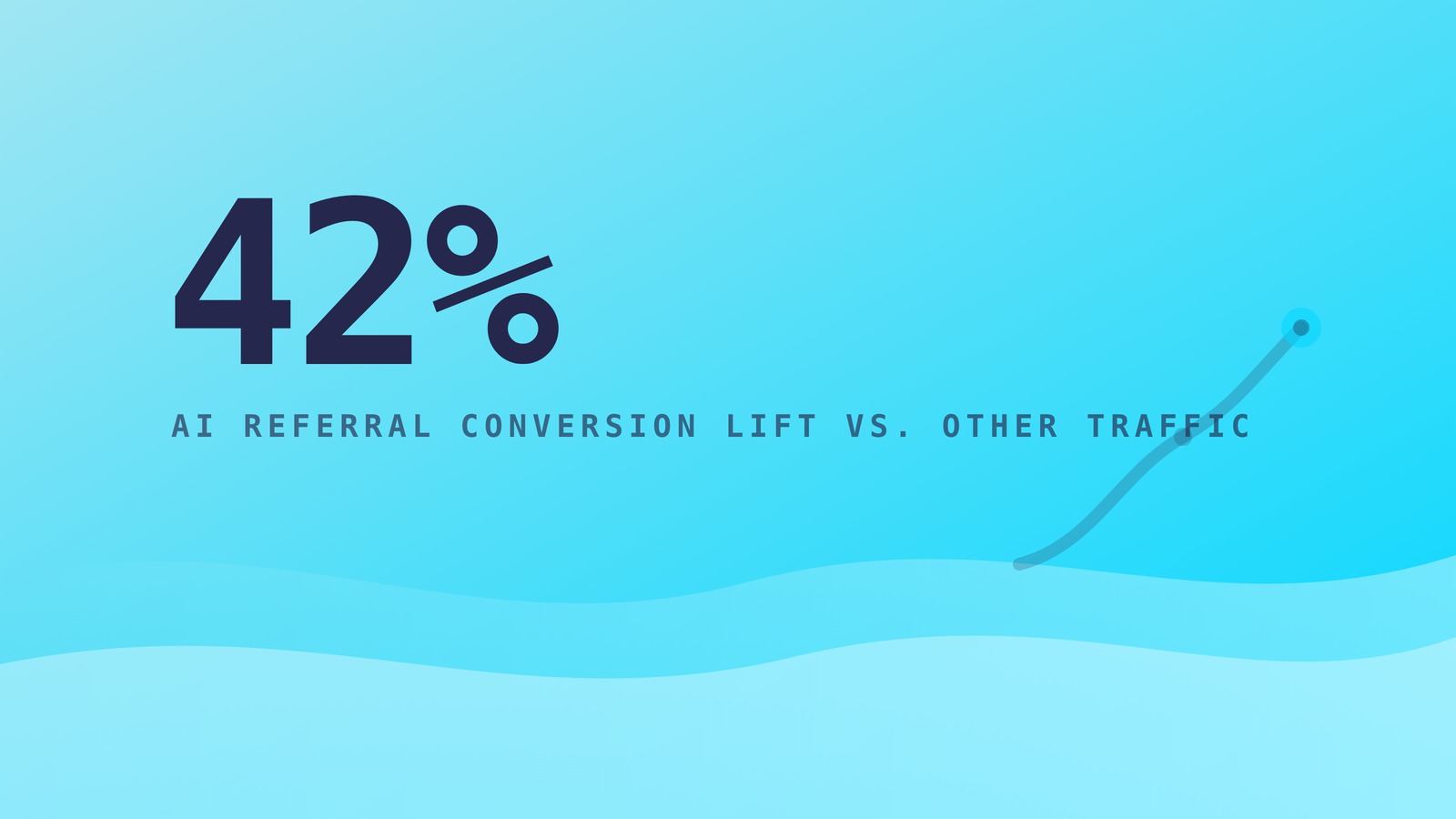
- AI-referred visitors to U.S. retail sites converted 42% better than all other traffic combined in March 2026, a complete reversal from a year earlier when they converted at nearly half the rate.
- Google is serving Shopping and Performance Max ads inside AI Mode and rolling out agentic checkout, so purchases increasingly complete off your domain where client-side pixels never fire.
- AI agents choose products on structured feed data, not ad creative. Your product feed and server-side measurement are the two highest-leverage investments this quarter.
A year ago, if a shopper landed on your site by way of an AI chatbot, that visit converted worse than almost anything else in your analytics. Adobe’s own data put AI-referred traffic at nearly half the conversion rate of other traffic in March 2025. Twelve months later, in March 2026, that same channel converted 42% better than non-AI traffic, according to Adobe Digital Insights’ analysis of more than a trillion visits to U.S. retail sites. That is not a rounding error. That is a channel flipping from your worst traffic to your best traffic in a single year.
This post is about what caused that flip, and more importantly, what it means for how you run paid media and measure marketing performance for the rest of 2026. Agentic commerce, AI agents that research, recommend, and increasingly buy on a shopper’s behalf, is not a trend to plan around later. It is already showing up in your traffic reports, and Google and OpenAI are actively wiring checkout directly into the AI interface itself.
The Numbers: AI Traffic Already Behaves Like a Real Channel
Start with growth. AI-referred traffic to U.S. retail sites was up 393% year over year in the first quarter of 2026, per Adobe. Growth has since cooled from that early hypergrowth phase, up 138% year over year by May according to Digital Commerce 360’s read of the same Adobe data, but a channel still more than doubling in size a year into the shift deserves a line item in your reporting, not a footnote.
Quality is the more interesting story. In March 2026, AI-referred visitors, compared to shoppers arriving from every other channel combined:
- Converted 42% better, up from converting at nearly half the rate of other traffic just one year earlier.
- Generated 37% higher revenue per visit, another full reversal from a year prior, when non-AI traffic was worth far more per session.
- Spent 48% more time on site and viewed 13% more pages per visit, a sign of real engagement, not bot traffic inflating the numbers.
Consumer behavior backs this up. In an Adobe survey of thousands of U.S. shoppers, 39% said they had already used AI to shop, and 85% of that group said the experience beat the alternative. Shoppers arriving from an AI assistant have typically already done the comparison shopping inside the conversation. By the time they click through, they are closer to a decision than a typical top-of-funnel visitor, which is very likely why the conversion numbers look the way they do.
$67BSalesforce estimated that roughly $67 billion in global Cyber Week 2025 sales, about 20% of all online orders, were attributed to AI and AI-assisted shopping. The scale is already commercial, not experimental.
Google and OpenAI Are Building Checkout Straight Into AI
The traffic numbers are the lagging indicator. The bigger shift is that the platforms you already buy media on are rebuilding themselves around AI-native shopping, not bolting AI onto the old results page.
Google’s Shopping Graph, the product data layer behind Search, Shopping, and now AI Mode, has grown to more than 50 billion product listings, with 2 billion of them updated every hour. AI Mode now returns comparison tables, shoppable images, and live pricing and inventory directly in the conversation, and Google is rolling out agentic checkout that purchases an item automatically on a shopper’s behalf once it hits a target price, starting with merchants like Wayfair, Chewy, Quince, and select Shopify stores.
OpenAI pushed a similar vision through Instant Checkout and its Agentic Commerce Protocol, though the early results were rougher. OpenAI pulled Instant Checkout back after finding that shoppers were largely hesitant to complete a purchase inside a chat interface, and brands struggled with the logistics of exposing live inventory to ChatGPT. It is a useful reminder that agentic commerce is real and moving fast, but not a solved problem yet.
For paid media specifically, Google started serving Shopping and Performance Max ads inside AI Mode in February 2026, drawn from advertisers’ existing campaigns and labeled sponsored. Google is also piloting Direct Offers, merchant-funded promotions that surface inside AI Mode when Google detects a high-intent shopper. Google decides the timing and placement, not the advertiser, which is a meaningful change in how much control you hand over.
The Attribution Problem Nobody Is Talking About Enough
Here is the part that should worry your analytics setup more than your creative. When a purchase happens through a Buy for Me style checkout or a universal cart protocol, two things can go wrong at once. Conversions register on the platform side, but campaign-level attribution back to the ad that started the journey gets lost. And because the purchase completes on Google’s or OpenAI’s surface rather than your own domain, client-side pixels never fire at all.
This is not a hypothetical for next year. It is happening now, on top of measurement that was already strained by cookie loss and AI-driven bidding systems like Performance Max and Advantage+ that grade their own homework.
Pro tip: this is exactly why we tell clients to anchor on marketing efficiency ratio (MER), total revenue over total marketing spend, rather than platform-reported ROAS. MER does not care which surface claimed the sale or whether a pixel fired. It is quickly becoming the only number in the room you can fully trust.
What To Actually Do About It
None of this means panic-reallocating budget out of Search and Meta. Agentic commerce is additive to existing channels right now, not a replacement for them. But a few moves are worth making immediately:
- Treat your product feed like a bidding asset, not a back-office chore. AI agents evaluate products on structured data, price, availability, shipping, and returns information in your feed, not on ad copy or creative. One widely cited test found OpenAI’s own shopping tool matched products correctly 52% of the time on multi-constraint queries, versus 37% for standard ChatGPT search, underscoring how much agents lean on clean structured data to get the match right.
- Audit machine readability, not just page speed. Adobe’s AI Content Visibility Checker found the average retail product page is only 66% machine-readable, the weakest score of any page type it tested. That is the exact inventory AI agents are trying to parse before recommending you.
- Move to server-side tracking wherever checkout can happen off your domain. Client-side pixels are the first casualty when a purchase completes inside Google’s or OpenAI’s interface instead of yours.
- Report on MER and incrementality alongside platform metrics. As more of the funnel disappears into a black box you do not control, the metrics that do not depend on that box matter more, not less.
The brands treating this as an operations and data problem right now, not a wait-and-see one, are the ones that will show up when an agent goes looking.
Frequently Asked Questions
What is agentic commerce?
Agentic commerce is shopping carried out partly or entirely by an AI agent acting on a person’s behalf, researching options, comparing prices, and in some cases completing checkout, rather than a human clicking through a search result or ad themselves.
Will AI shopping agents replace paid search and social ads?
Not in the near term. Google is serving existing Shopping and Performance Max ads inside AI Mode rather than replacing them, and agentic traffic is still a small fraction of total ecommerce traffic today. Treat it as a new, fast-growing channel to prepare for, not a reason to pull spend from Search or Meta.
How do I optimize my product feed for AI shopping agents?
Prioritize complete, accurate, and current data on price, availability, shipping, returns, and specifications, since agents match on structured data first. Then check the machine readability of your actual product pages, not just your feed, since Adobe found product pages are the least machine-readable page type on the average retail site.
The Takeaway
AI-referred traffic converts better than it did a year ago, and Google and OpenAI are actively building purchases directly into AI. Neither of those things wait for you to be ready. Treat your feed and your measurement as two of the most important investments you can make this quarter, before an agent decides which of your competitors gets recommended instead of you.